
Updated: Mar 3, 2022
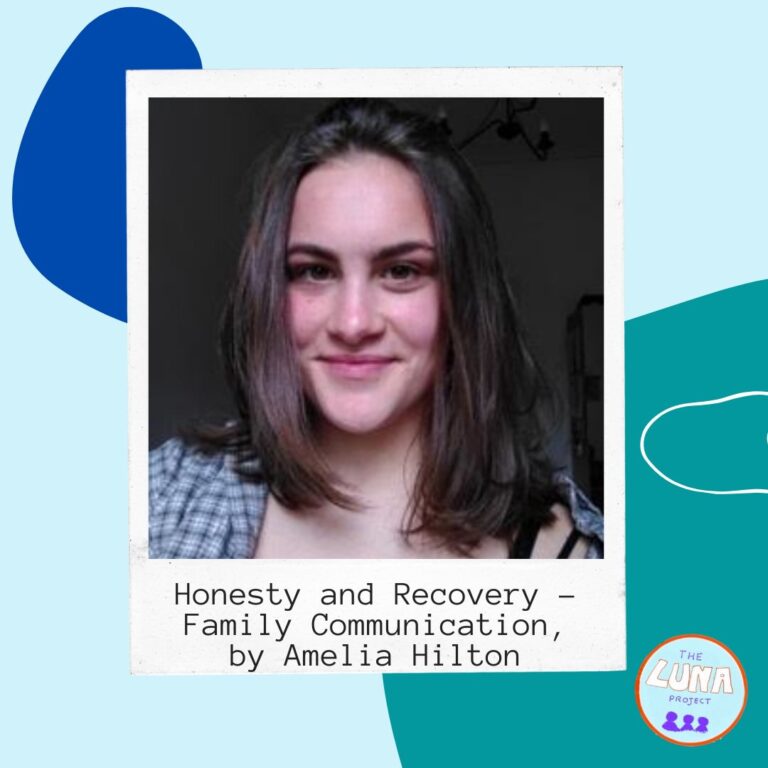
By Amelia Hilton (she/her)
CW: eating disorders and exercise
I found talking to my family about experiencing mental health issues incredibly difficult. I was in complete denial about my ED. I was constantly telling myself that my obsessive thoughts and extreme behaviours to do with eating and exercise were ‘healthy’. I was sure everyone else would eventually understand that I had been doing ‘health’ right while they deteriorated. Whenever my parents tried to gently suggest they might be harmful, I would lie about what I had done that day or, if they pressed me, explode into a defensive, angry mess.
More extreme behaviours crept into my routine gradually. They became so normal, and I became so upset when they were mentioned, that my parents stopped trying to start those conversations at all so I didn’t get distressed. The communication gap got bigger and bigger as I started to lie more about ‘seeing friends’ and ‘eating at college’ when I had skipped meals and spent hours in the gym.
Later down the line, I had not had a period for 5 years because of my low food intake and overexercising. My dad came with me to see a reproductive health specialist and saw my weight on the scales for the first time in years. He couldn’t find the right words to say and gave one heavy sigh as his eyes welled up. The specialist gave many subtle suggestions that my problem went beyond the physical, which I wilfully ignored and argued were ridiculous to my dad.
It took my brother visiting us after a few months away and witnessing our dinner routine as an outsider to shake me and parents awake. After going for my daily long run before dinner, cooking my own entirely separate meal, and refusing to make eye contact as I cut my food into tiny pieces, my brother shouted “Why are you letting her do this? Can’t you see it’s not normal!”. Even then, I was shocked by the force of my aggression arguing against him. I said anything and everything to hurt him, my ED thoughts so desperate to defend themselves I got lost among them.
A few weeks later, I broke down into hysterical sobbing during my daily workout. I had to admit to myself and my family how bad things had become. The first conversation was hard, but they supported me the whole way in looking for my diagnosis. It was even harder to fight my kicking and screaming ED mindset to explicitly request changes from my family. I felt so tiny and hopeless asking them to hide the scales and not talk about their weight around me. They tried their best but as all humans do, sometimes they forgot. It got easier each time to ask for them to help me in these ways, and to explain to them truthfully why I needed these things to happen.
Years on, I’ve been able to share the things I used to hide from them. It’s taken time for them to accept the boundaries I need, and I have learned to communicate changes without implying they are to blame. Sometimes the impact of my ED on our communication and relationships comes up in surprising ways. I visited home for Christmas last year after breaking my foot on a sub crawl. When talking about how it had happened, my mum kept asking why I had done it and kept walking on it for 20 minutes. After agreeing with her over and over that it was a complete accident and it was a mistake to continue walking, she still wouldn’t let up. Exacerbated, I asked why she was so angry when I was agreeing with her.
Her response was “because you didn’t listen to your body!”. Since then, I try to remind myself that just because I have been working to accept and heal from the effect my ED had on me, they understand and process what happened in their own ways. Over years of work,
we’ve all become more willing to learn from and listen to each other, with less defensiveness and blame. We’re more able than ever to admit when we’ve been wrong and try to make changes. I’m incredibly grateful we can reflect on difficult things that happened in the past to improve our relationships for the future.